

- Head of Growth
- Author
 846
Oleksandr Vlasenko
Oleksandr Vlasenko
Author
846
Oleksandr Vlasenko
Oleksandr Vlasenko
Author
 846
846
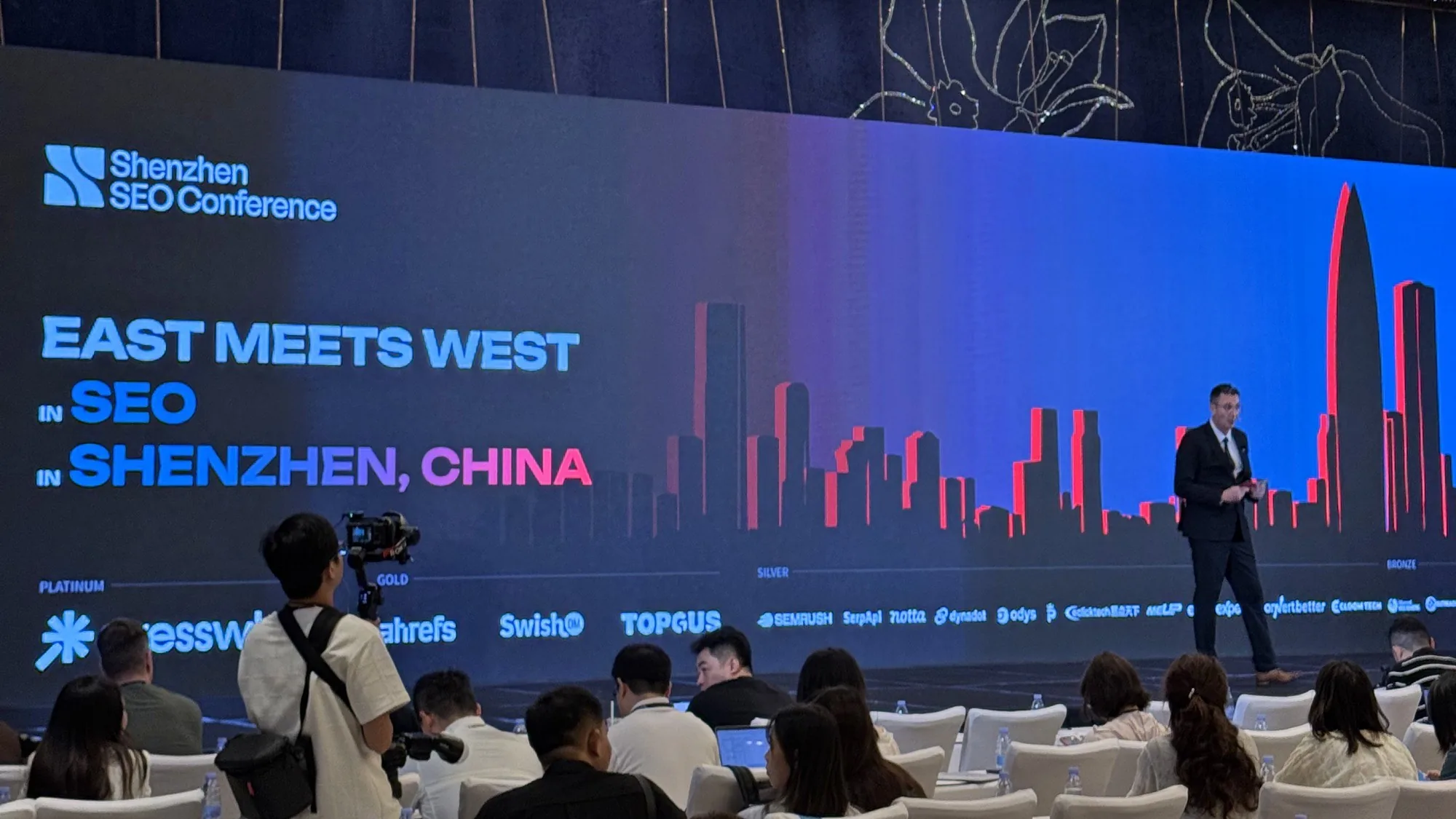
In September, the BlueVPS team attended Shenzhen SEO Conference 2026. For the second year running, the event brought together search and e-commerce specialists from Asia and the West. The main conference days were September 16 and 17, and that is when Oleksandr Vlasenko, Head of Growth at BlueVPS, was there.
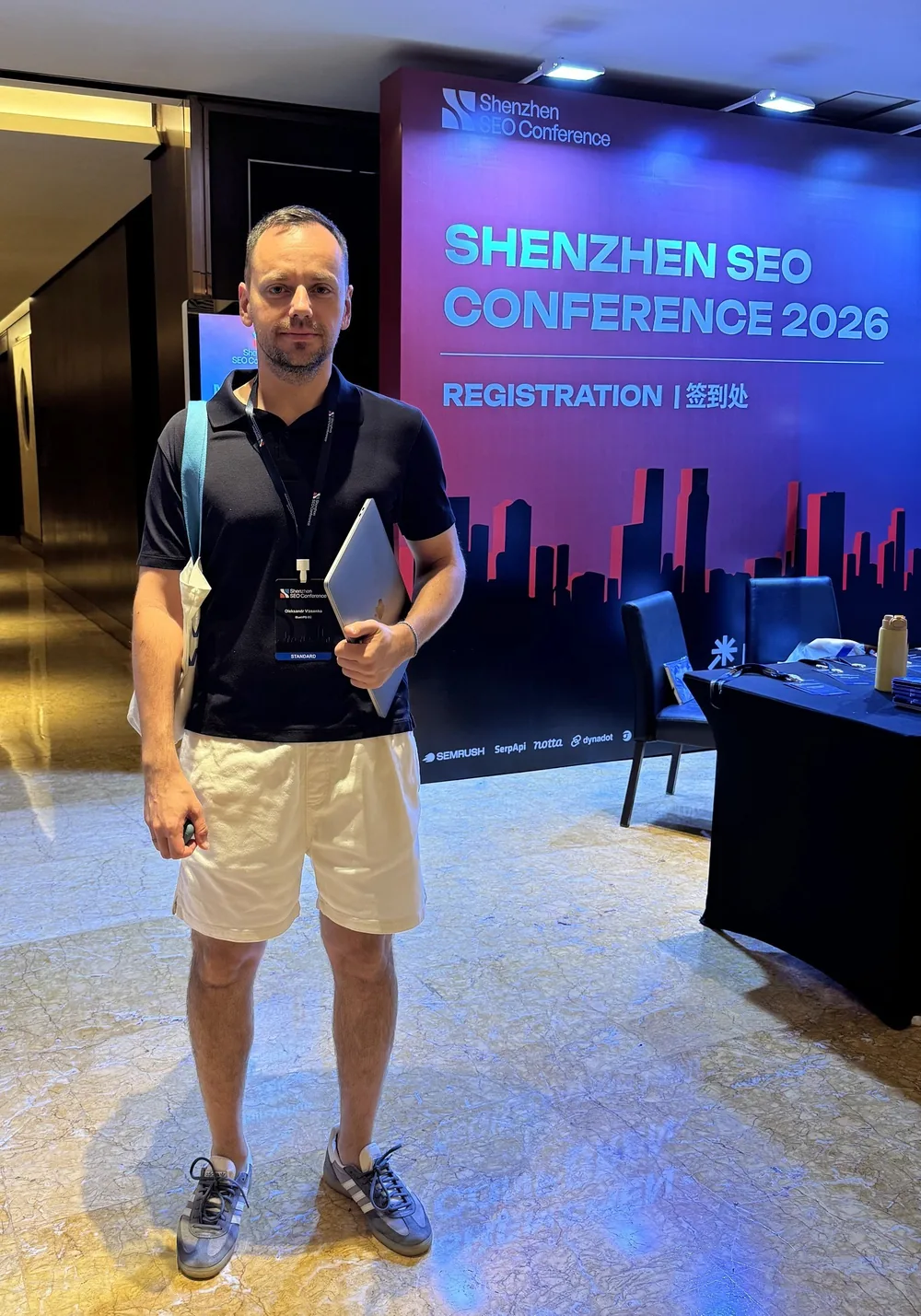
Oleksandr Vlasenko, Head of Growth at BlueVPS, at the registration desk.
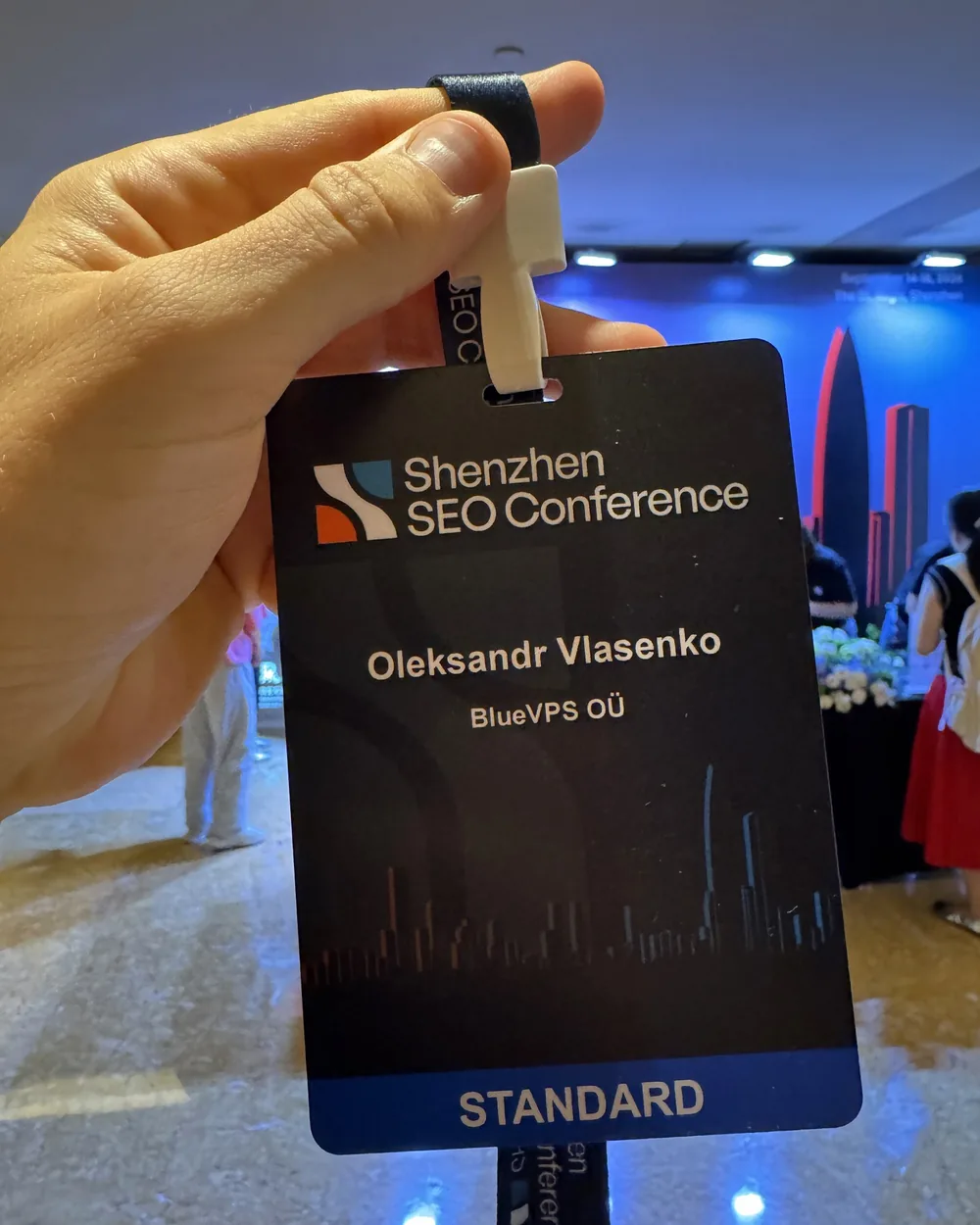
Attendee badge.
The conference was organized by JP Zhang. The program featured more than 50 speakers from Europe, North America, Australia, and Asia. For us, it was a chance to exchange hands-on experience and meet people who work across different markets and face the same shifts in digital that we do. Building new contacts in the Asian market was a goal in its own right.
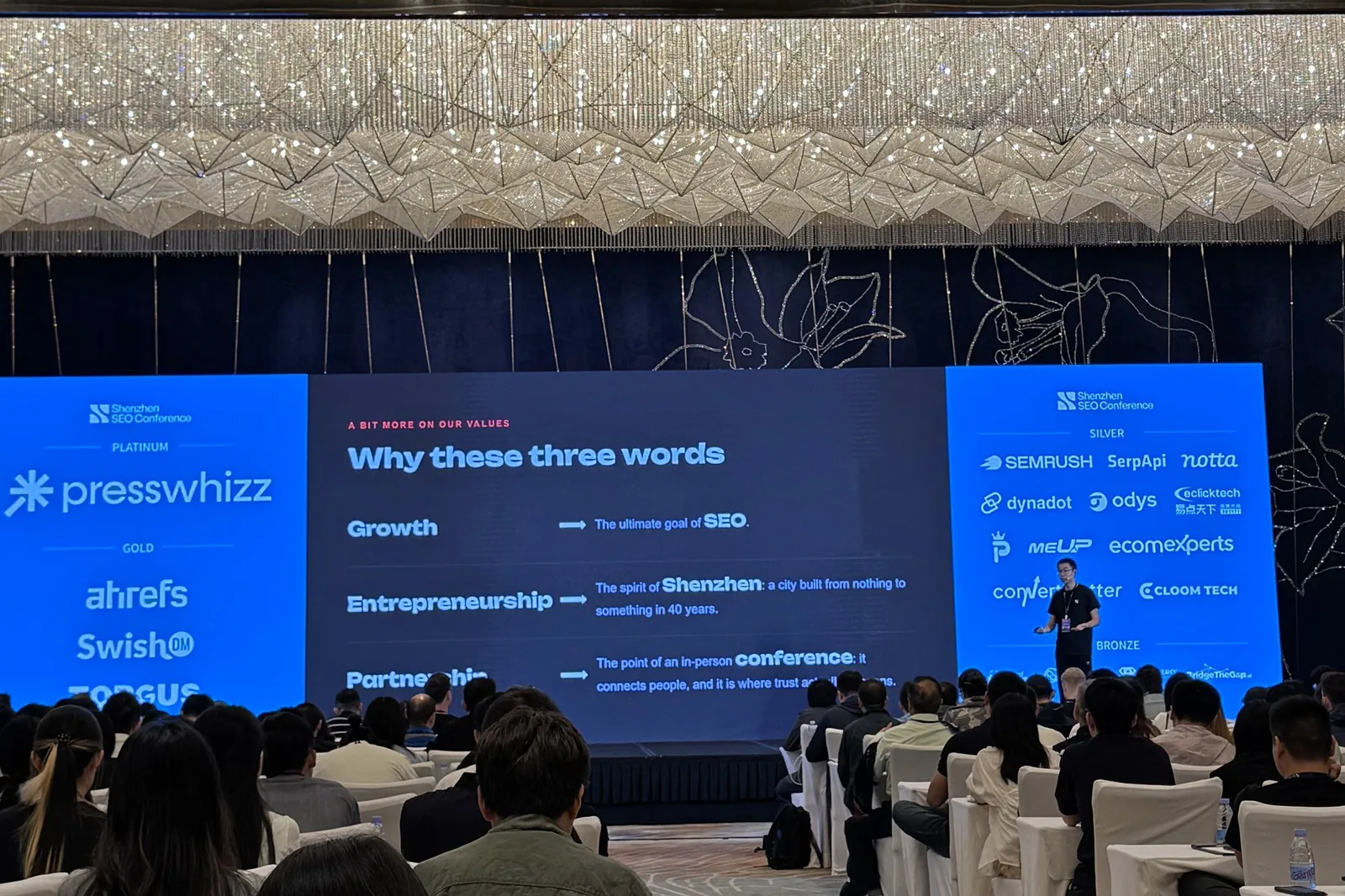
The hall and the stage during a talk.
Even more important was understanding where the industry is heading right now. SEO, web development, content, and customer acquisition are all changing noticeably under the influence of AI. One of the main takeaways turned out to be quite practical: AI does not replace the human specialist. It changes their day-to-day work and raises the bar for results.
The fundamentals of a good website are not going anywhere. Technical stability, usability, useful content, a clear structure, and a site that works properly all still matter. What is gradually changing is how effectiveness is measured. There is less and less point in simply adding more pages, more text, more links, or more SEO activity. What matters more is the quality of the end result and the real value it brings to users and the business.
This report looks at exactly that shift and picks out the ideas you can take from the conference into day-to-day practice right now.
For BlueVPS, it also means a higher standard for our work on client projects. We need to understand what will be expected of websites tomorrow and plan for it today.
The most unexpected takeaway of the conference was that the AI visibility problem is not a creative one (producing quality content) but a technical one (how code and servers are set up):
One striking figure came up at the conference: according to OtterlyAI, 73% of websites have technical barriers that stop AI crawlers from reading them. For us, this is an important signal when choosing a strategy. Optimizing a site for new search scenarios starts with checking whether AI systems can fetch and understand the content at all. Creating quality content still matters, but it comes second.
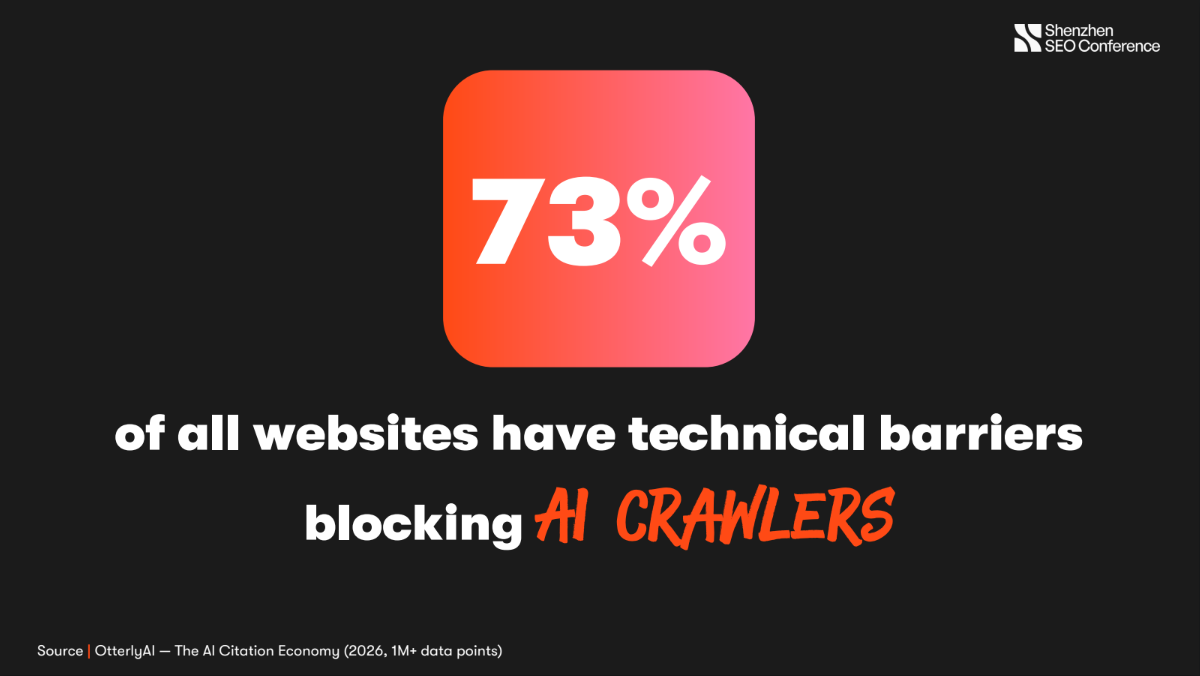
Slide from the talk by Wasin Mekkit (Statrys), "AI Search Can't Render Your JavaScript-Heavy Website? SEO Can Fix That." Source of the figure: OtterlyAI, The AI Citation Economy, 2026.
There is good news too. Solving the problem does not require inventing new SEO tools. The technologies involved have been familiar to specialists for about fifteen years and are part of basic technical SEO:
The good old technical fundamentals are still a competitive advantage.
One of the speakers showed the results of such a rebuild on their own project. After the changes, AI bot requests to the server grew by 106%, and combined conversions from organic search and AI grew by 115%. At the same time, the time from first visit to purchase for users arriving from AI more than halved. The speaker's explanation: someone who arrives from AI has already received part of the information they need before reaching the site. They do not have to figure things out from scratch. They open the page for the next step: to compare the offer, check the details, and convert.
A technical site audit should now include one more check: can AI get the content we want to show it? This is one of those cases where a small amount of work now is a good investment in future organic and AI traffic.
One of the most useful practical takeaways from the conference is that there is no universal recipe for AI optimization.
Different systems search for information, choose sources, and use what they find in different ways:
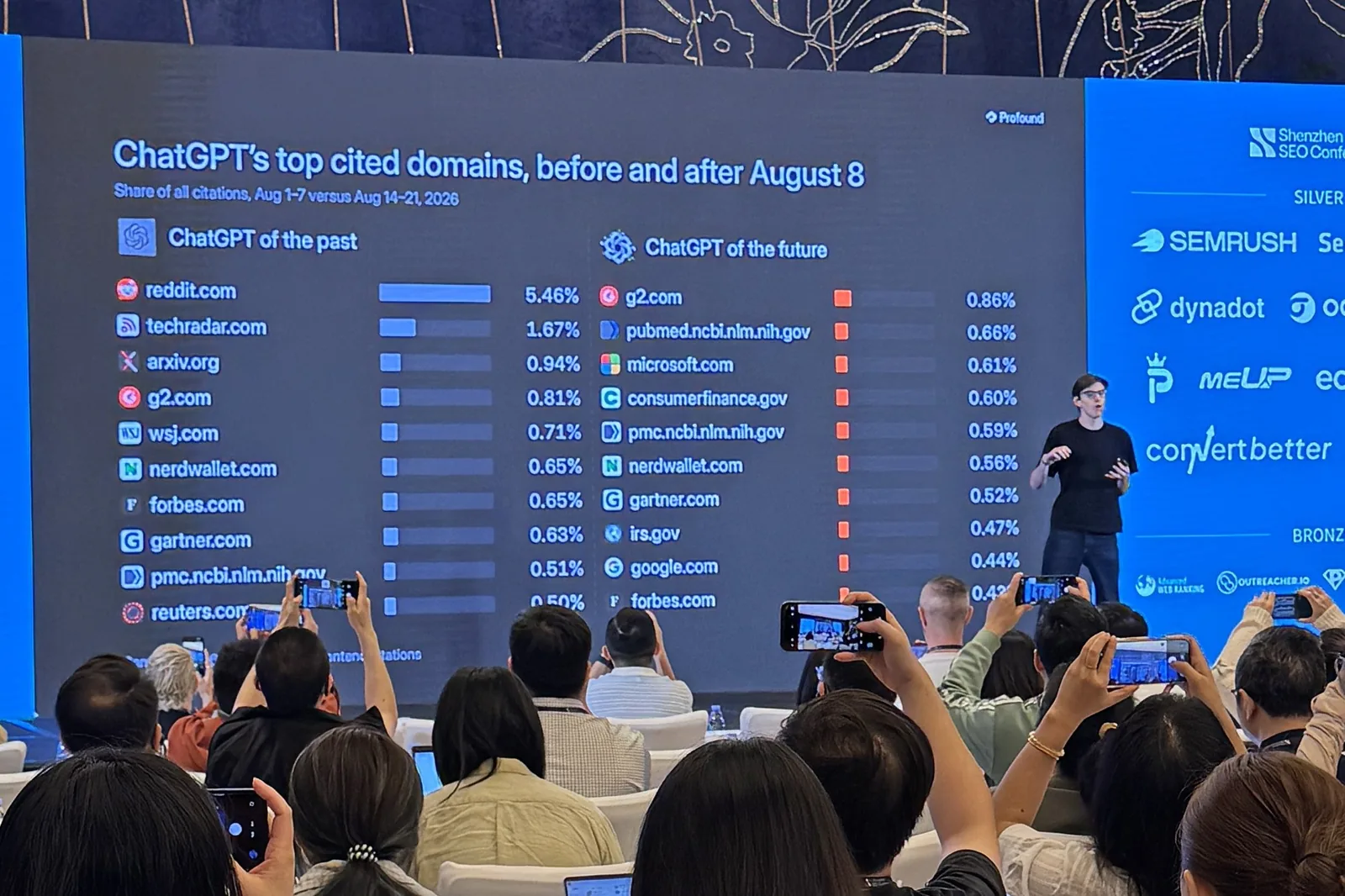
ChatGPT's most cited domains before and after August 8. Josh Blyskal, Profound.
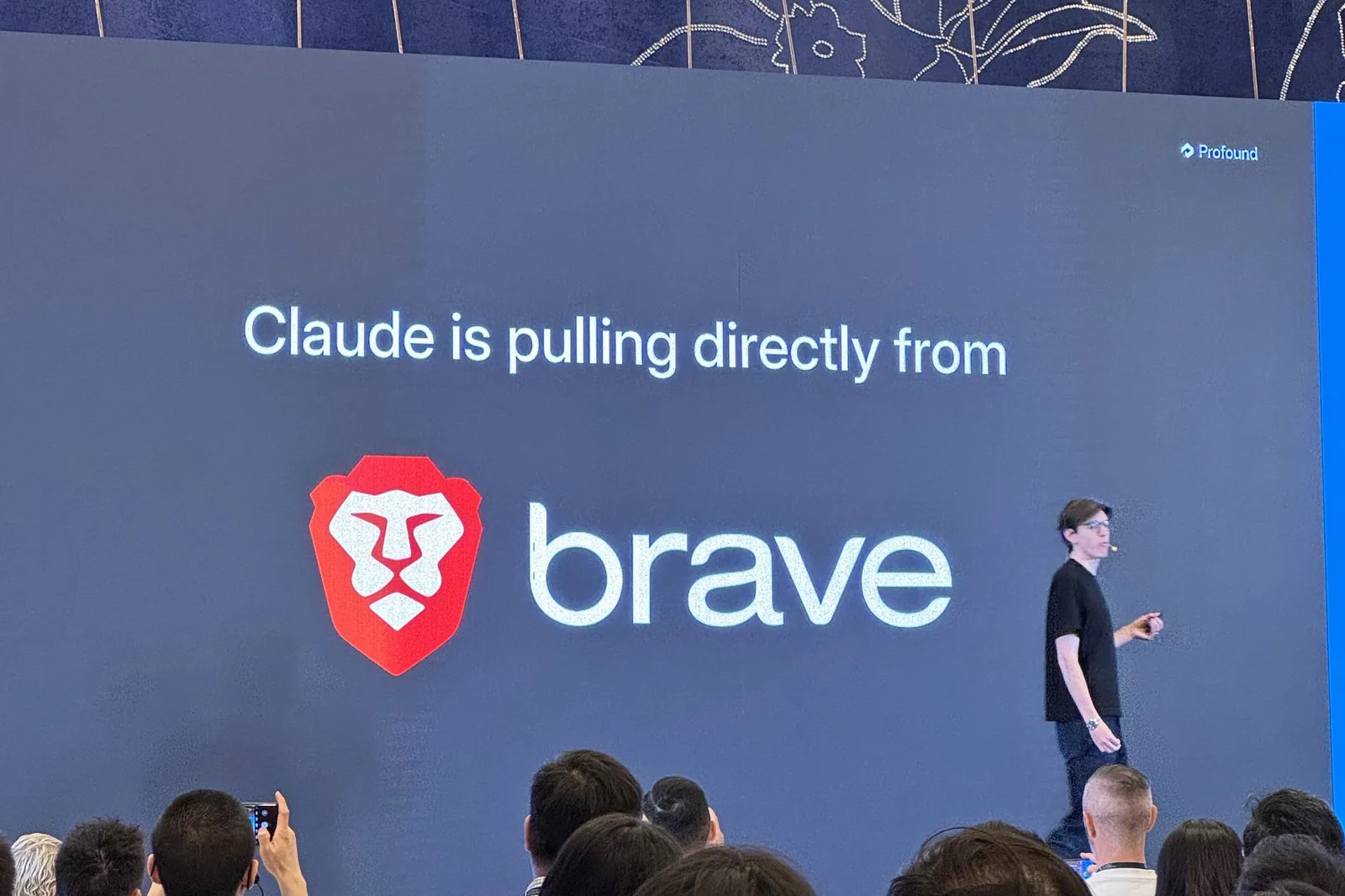
"Claude is pulling directly from Brave." Josh Blyskal, Profound.
That said, a site should not turn into an endless stream of new texts. Less content for the sake of volume, more quality information that is actually worth showing to both people and AI.
AI citation works nothing like traditional link building. Several speakers reached this conclusion independently of each other.
When AI answers a question about a company, it has no ready-made "file" with the correct description of the brand. It assembles the answer at the moment of the query from the sources available: the company's site, reviews, forums, social media, publications, and other materials. At that moment, the company itself is effectively not in the room. Others are talking about it.
Two conclusions follow that matter for business:
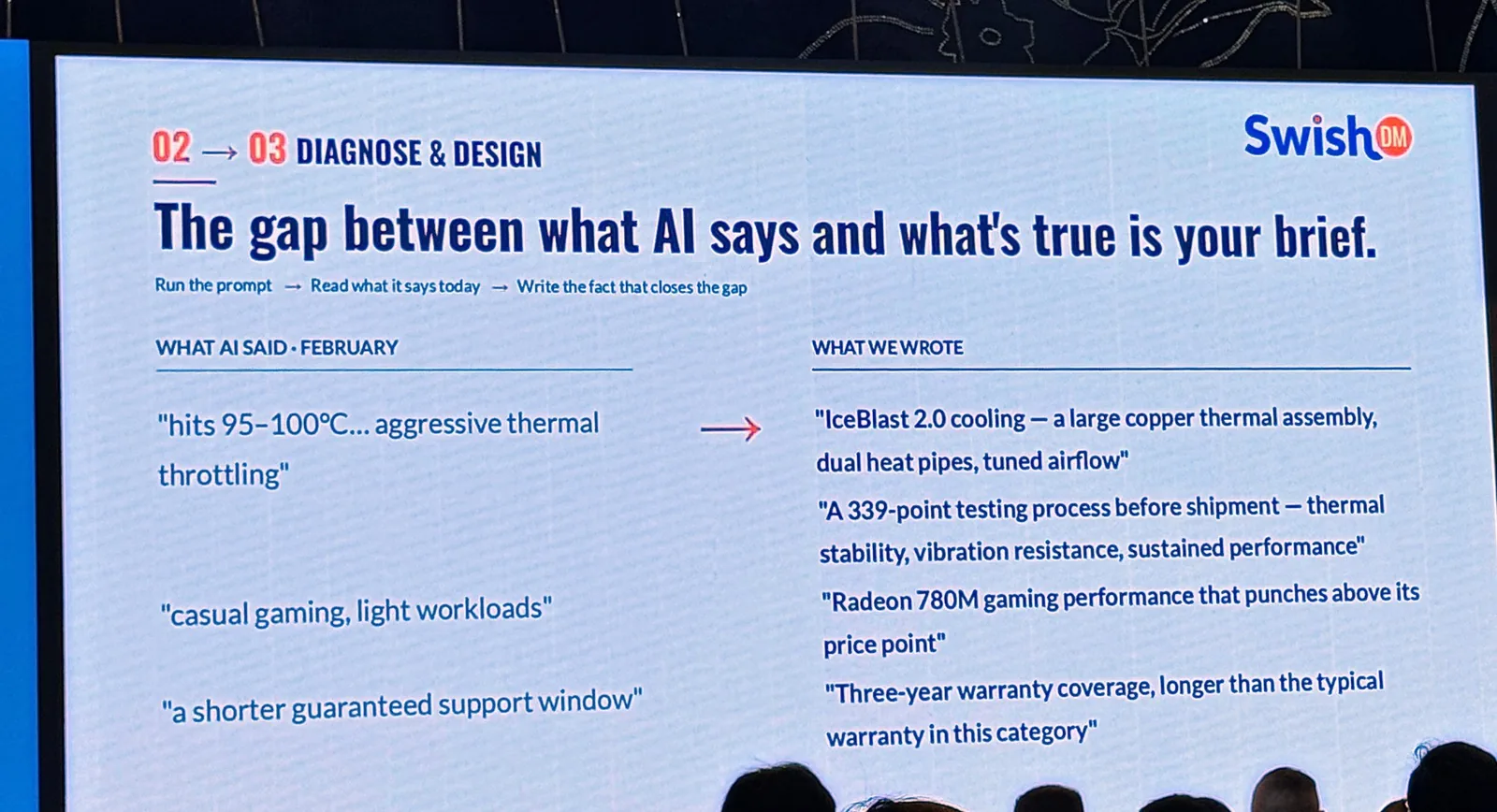
"The gap between what AI says and what's true is your brief." Jonathan Kiekbusch, SwishDM.
One of the speakers showed an example where about ten new articles noticeably changed how a brand was described in AI answers.
An even more telling case comes from China. Journalists on a TV program bought publishing software for 40 yuan and, within three days, placed 11 articles about a device that does not exist. As a result, five major AI models started recommending this made-up product to real users.
This means that routine reputation and SEO work now includes regularly checking what different AI systems say about the brand, which sources they use, and which characteristics of the company keep coming up in answers. You need to understand what image of the company is forming beyond its own website. And the information landscape around a brand can be developed systematically, with your own content and quality external sources.
A separate block of talks covered entering Asian markets. The overall conclusion: "entering Asia" is not a single task. Korea, Japan, and China each require a completely different approach to search, content, and audience.
Naver, the country's main search engine, is built differently from the Google most of us are used to. Its own ecosystem services play a prominent role in the results: blogs, communities, shopping, video. Even a well-optimized corporate site can get very little attention.
In practice, what matters is publishing inside the Naver ecosystem and working with local bloggers. An author's follower count is not the main metric. What matters far more is how well their content ranks and how visible it is in search.
The rapid spread of AI search deserves separate attention. According to data presented at the conference, its share in Korea grew from 12% to 39% in two years. When entering this market, it pays to study in advance the new channels people use to get information.
In Japan, link building does not deliver the effect it has in many other markets. After links were overused around 2010, Google tightened its approach to such practices considerably. Since then, SEO there has shifted toward work on the site itself.
What carries enormous weight is localizing the logic of the content itself: topics, wording, page structure, user scenarios. Simply translating existing articles is not enough. Users in Japan phrase their queries differently, look for information differently, and take a different path to purchase. Even important business decisions are often made on the go, right from a smartphone. That makes mobile habits especially important here.
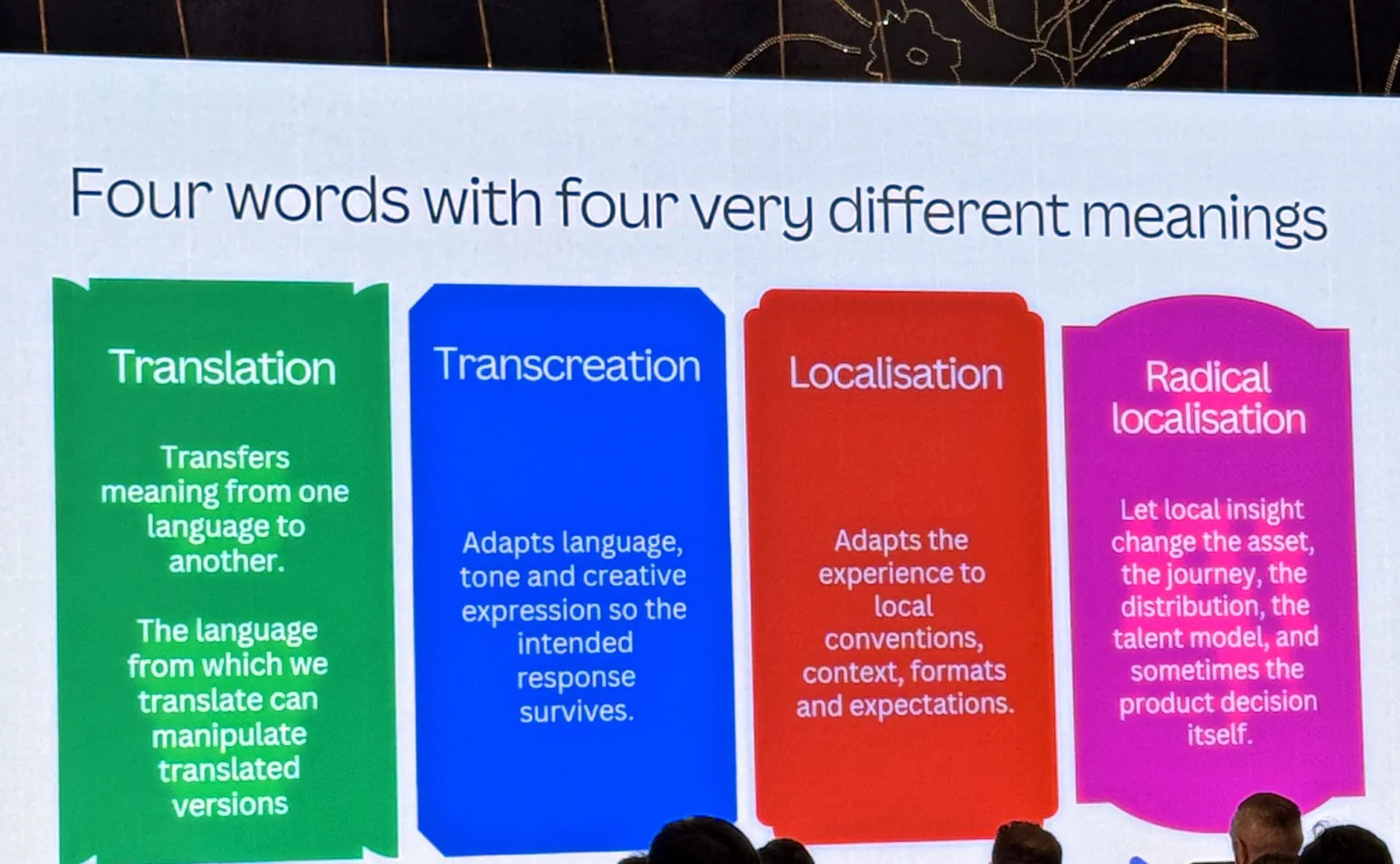
Translation, transcreation, localization, and radical localization: four different jobs.
China is different again. Local AI platforms turn first to sources inside their own ecosystems, for example to services of the same holding company that owns the model.
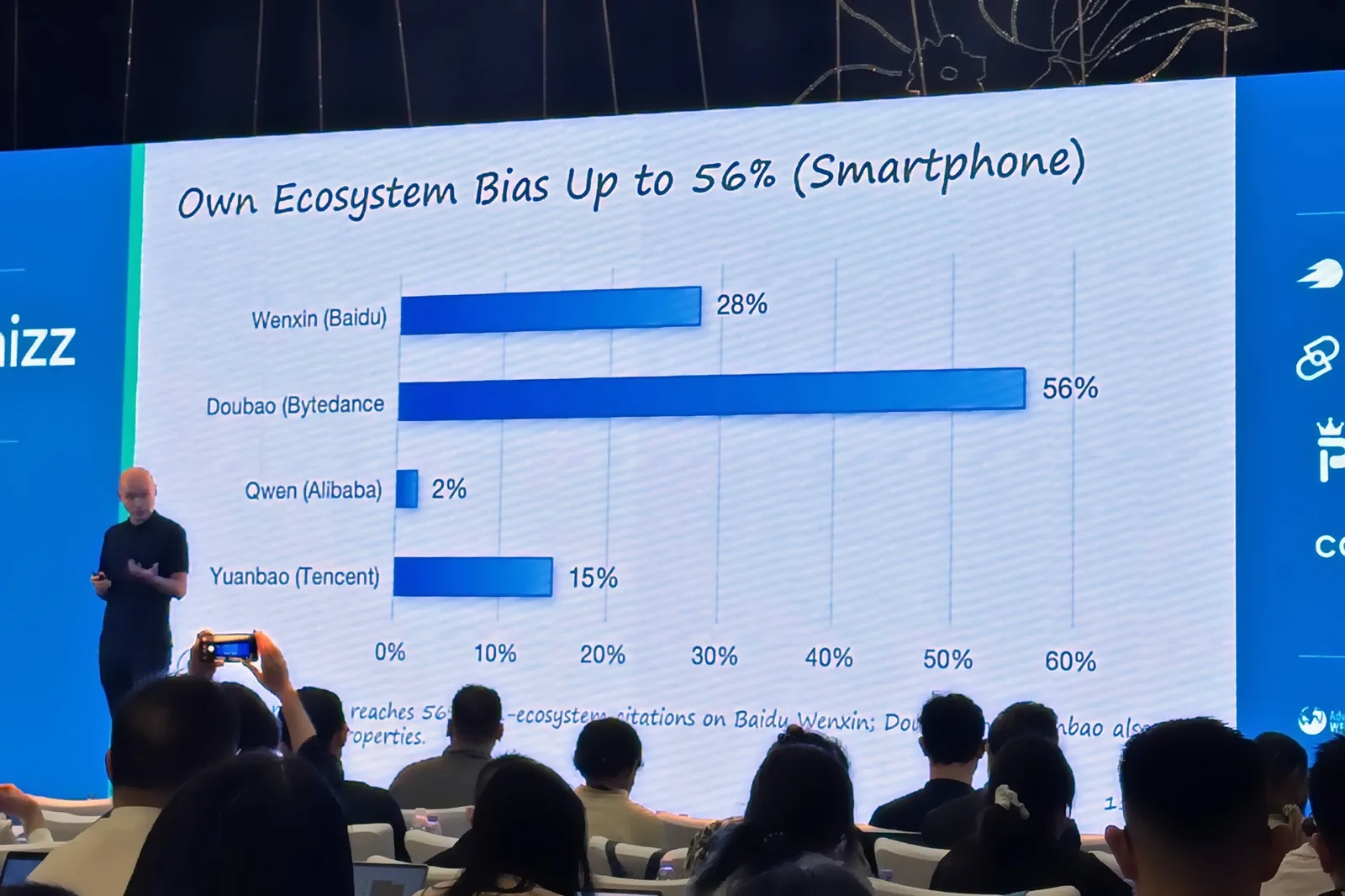
Share of citations that Chinese AI platforms take from their own ecosystems: up to 56%. Kun Tang, Jademond.
In B2B, though, the picture turned out to be more open. In Jademond's study, 53% of citations for industrial machinery went to non-Chinese content. This means a quality English-language site with solid authority can make it into a Chinese AI answer even without full localization.
All of this is worth factoring in when developing an SEO strategy for a client. It makes more sense to break the task down by market and define a separate mix for each one: website, local platforms, content, technical optimization, partnerships, and AI visibility work.
Several talks were about AI agents, and the same pattern came up in all of them. According to the speakers, in some processes an agent can already do about 90% of the groundwork. But the final say stays with the specialist. Before changes go live on a site, a message is sent, or any other potentially important action is taken, a human has to confirm it.
Speakers showed scenarios from their own practice:
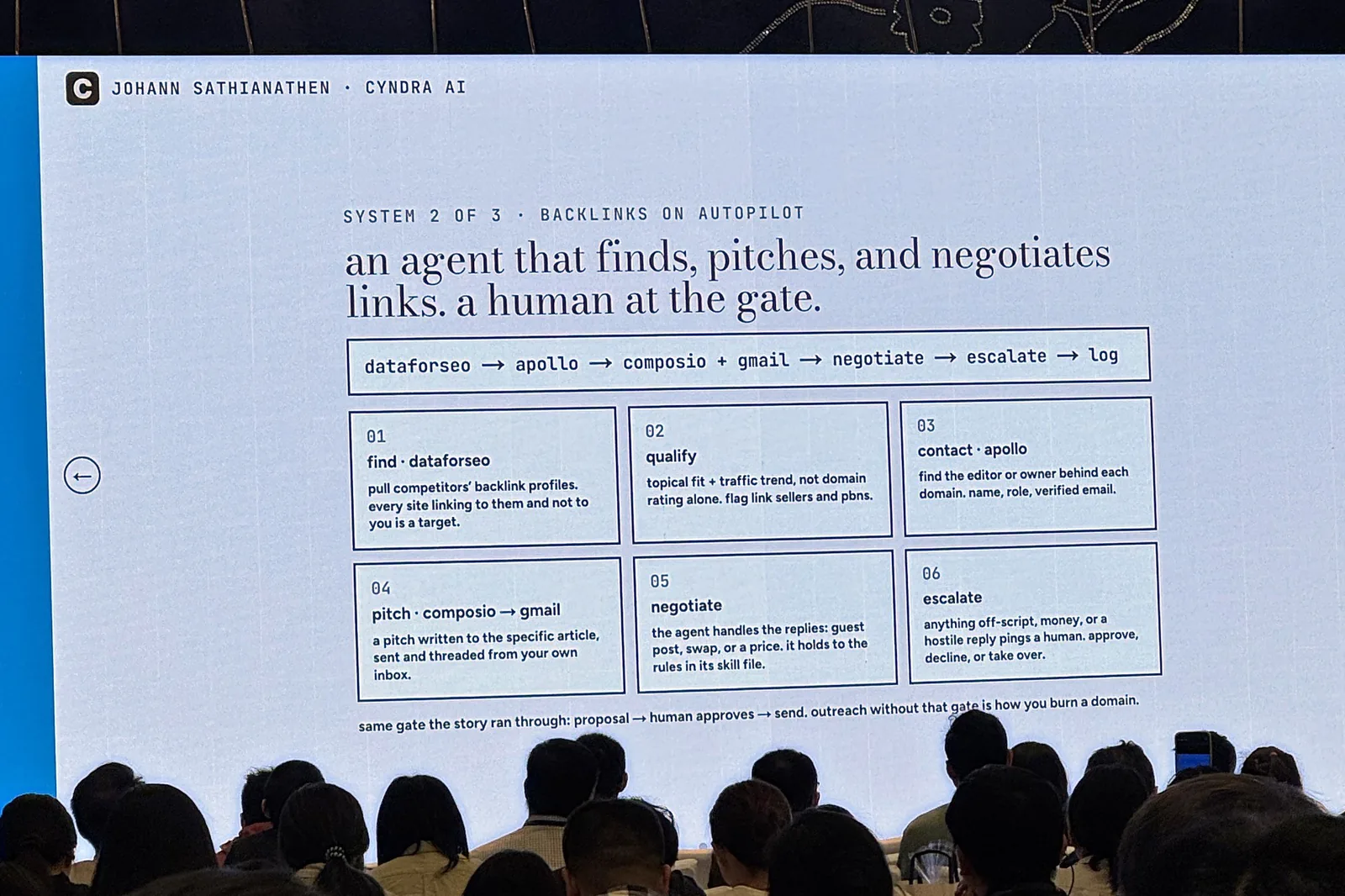
"An agent that finds, pitches, and negotiates links. A human at the gate." Johann Sathianathen, Cyndra AI.
Automation is also deliberately limited. For example, a cap of 20 to 50 new pages a week is set to avoid an unnatural spike in activity. After about 90 days, the pages are revisited to check whether they have been indexed and whether they are getting impressions.
Good automation looks like a pairing of a machine that gathers data, checks it, and proposes solutions, and a human who evaluates, decides, and is accountable for what the client or user will ultimately see. The goal is to free up the specialist's time for work that really needs experience, review, and decisions.
The mere fact that AI was used does not make a piece good or bad. One thought stuck with us: bad AI content is not content made with AI, it is content nobody took responsibility for.
Perhaps the most sobering talk of the conference was not about growth but about loss.
The founder of a large coupon site described how his project grew to 8 million visits a month, and then, after one of Google's updates, traffic fell below one million. In annual terms, that meant losing more than 80 million visits.
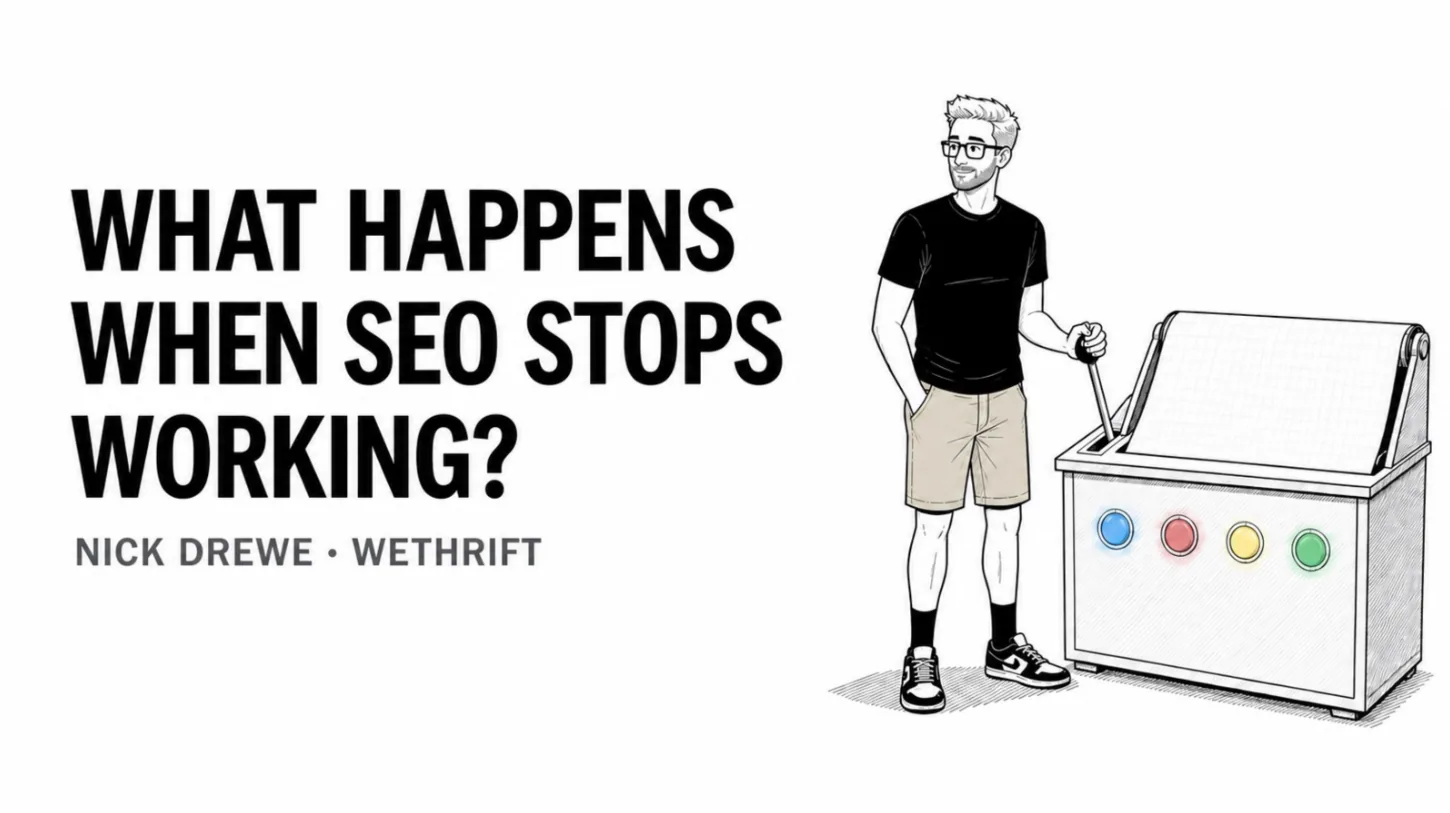
Title slide of the talk by Nick Drewe, founder of Wethrift: "What Happens When SEO Stops Working? Lessons from Gaining and Losing 80 Million Visitors."
The decline lasted a year and a half. The team kept trying to win the numbers back the whole time, without success. In the end, the main lesson was not about algorithms. For years, free search traffic had created the feeling of a large and stable audience. But when the flow stopped, it became clear that the project had built almost no audience of its own. Hundreds of millions of visits passed through the site, and almost nobody stayed once the search engine stopped sending people.
This story echoes another observation heard at the conference. Many projects today are seeing traffic shrink while conversion rates rise. The reason is that AI takes over part of the preliminary research and filters out casual clicks. Users arrive at the site after they have already had their basic questions answered, compared options, and figured out what they need.
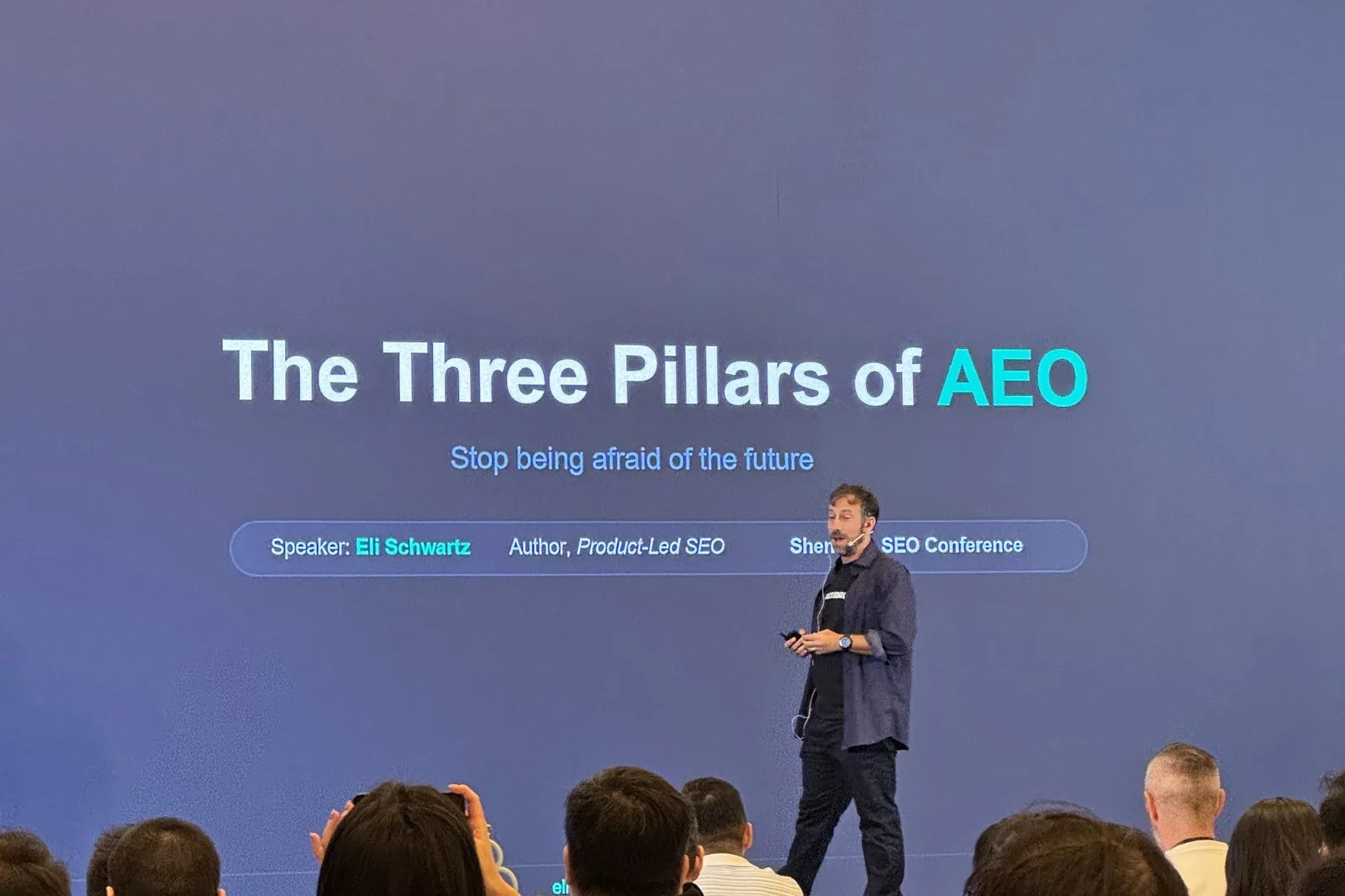
Eli Schwartz, author of Product-Led SEO, with his talk "The Three Pillars of AEO."
Fewer visits do not necessarily mean SEO is worth less. In this environment, the effectiveness of search work has to be judged differently, using other metrics: branded demand, direct visits, returning users, sales. And in parallel, you build brand awareness and an audience of your own. That is an asset a search engine cannot wipe out with a single update.
We are already acting on four things:
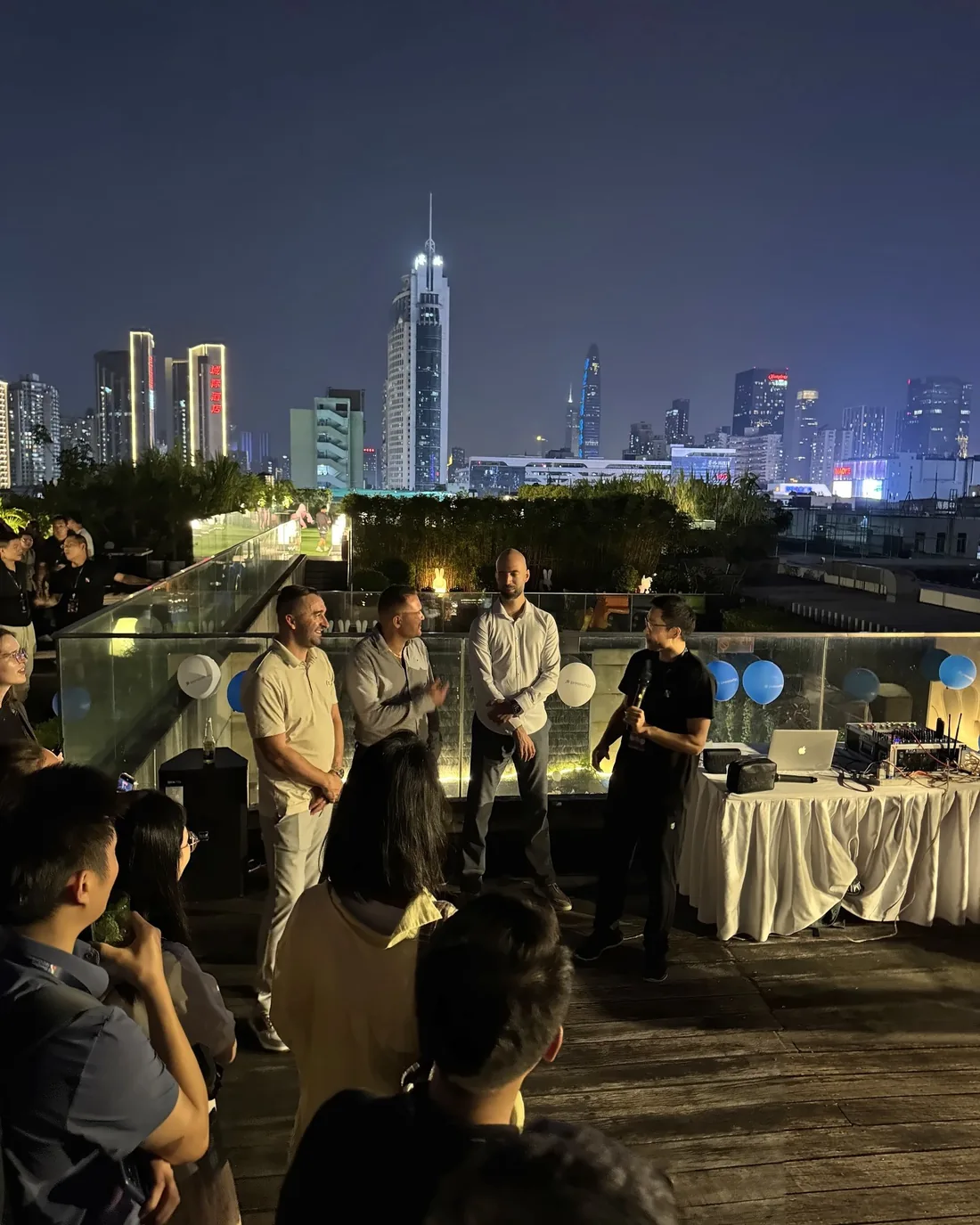
The opening party on a rooftop overlooking Shenzhen.
Our sincere thanks to organizer JP Zhang and everyone at Shenzhen SEO Conference 2026 for the chance to see what these changes look like not in theory but in the real work of specialists from different countries.
We will share the results of what we implement after the conference separately, with concrete figures and examples.
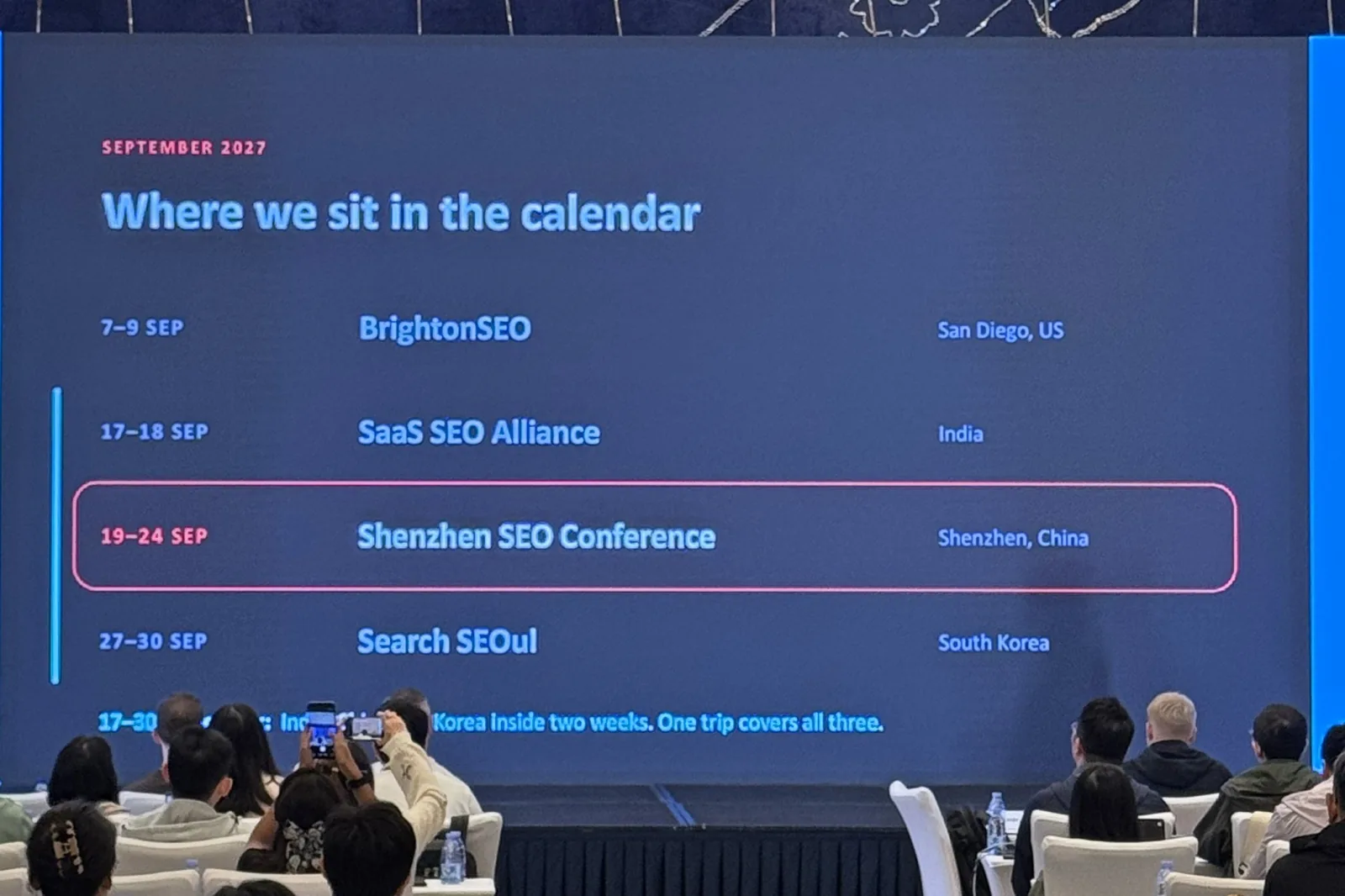
Closing session: the next conference is set for September 19-24, 2027.



Start for free and unlock high-performance infrastructure with instant setup.
Your opinion helps us build a better service.